Common Toxins in Homes: Hidden Sources and Simple Ways to Reduce Exposure
How to Create a Healthier Home While avoiding Fear, Perfectionism, or Throwing Everything Away.
There’s a moment many parents know well.
You’re wiping down the kitchen counter after dinner, a candle is burning in the background, laundry is tumbling in the dryer, and your toddler is crawling across the floor collecting crumbs like tiny treasures. Everything feels clean. Safe. Comfortable.
And then you read an article about “household toxins”.
Suddenly the candle feels suspicious. The cleaning spray under the sink looks aggressive. You wonder if the plastic lunchbox in tomorrow’s school bag is a mistake.
The truth is that modern homes do contain more synthetic chemicals than homes did generations ago. But that doesn’t mean your home is dangerous, and it definitely doesn’t mean you need to panic.
What matters most is understanding where common environmental toxins tend to hide in our homes, which ones deserve the most attention, and how small, realistic changes can meaningfully reduce exposure over time.
Discover more about how everyday environmental exposures can influence your health and well-being.
This guide breaks down the most common toxins in homes in a practical, calm, and science-informed way — especially for families, busy parents, and anyone trying to create a healthier, lower-toxin home without becoming overwhelmed.
Table of Contents
Understanding the Hidden Chemicals in Modern Households
Modern living has brought incredible convenience. Nonstick cookware saves time. Air fresheners make homes smell clean instantly. Furniture lasts longer. Cleaning products work faster.
But many of these conveniences come with chemical trade-offs.
Research over the past two decades has linked certain common household toxins to issues involving:
- Indoor air quality
- Allergies and asthma
- Hormone disruption
- Skin irritation
- Sleep disturbances
- Long-term chronic health concerns
Children are especially vulnerable because their bodies and brains are still developing. They also breathe faster, spend more time on floors, and frequently put hands and objects in their mouths.
Still, context matters.
Risk rarely comes from one dramatic product. It’s usually about cumulative exposure — small amounts from many everyday sources over many years.
That’s actually good news, because it means small improvements across your home can make a real difference.
A Hard Reality: Indoor Air Can Be More Polluted Than Outdoor Air
Most people assume pollution is something we encounter outside: traffic, smoke, industrial emissions.
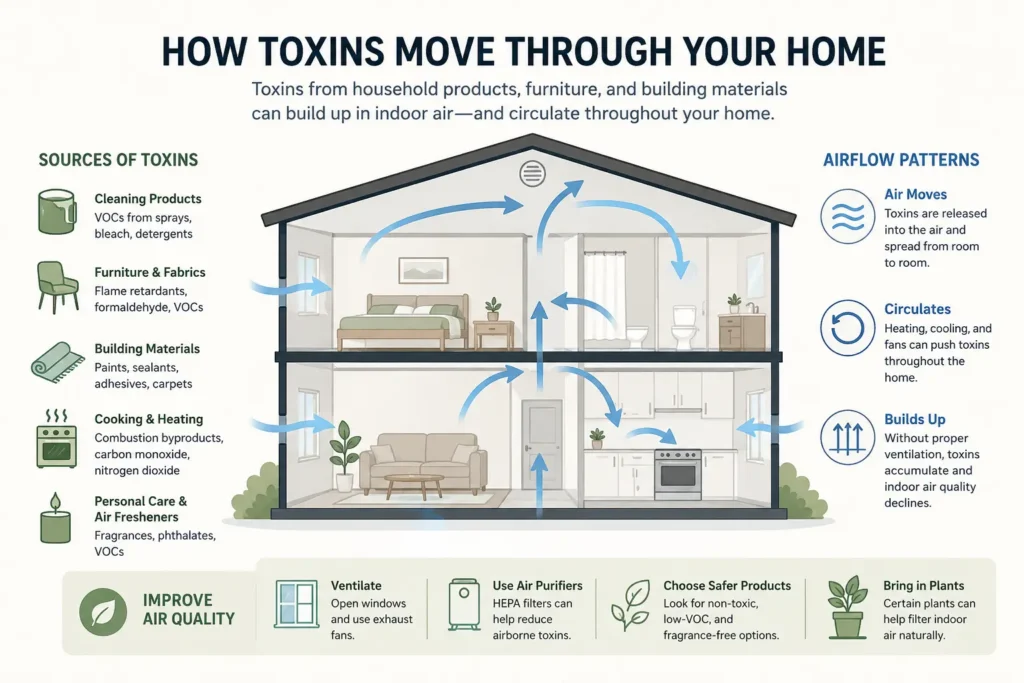
But according to environmental health researchers, indoor air can sometimes contain higher concentrations of pollutants than outdoor air — especially in tightly sealed modern homes.
Why?
Because chemicals released from furniture, cleaning products, synthetic fragrances, paint, flooring, and plastics become trapped indoors.
This process is called off-gassing, and it’s one of the biggest contributors to household toxins.
Common signs your home may have poor indoor air quality include:
- Frequent headaches
- Lingering chemical smells
- Worsening allergies indoors
- Irritated eyes or throat
- Feeling stuffy or fatigued at home
The encouraging part is that indoor environments are also where we have the most control.
1. Synthetic Fragrances: The “Clean Smell” Problem
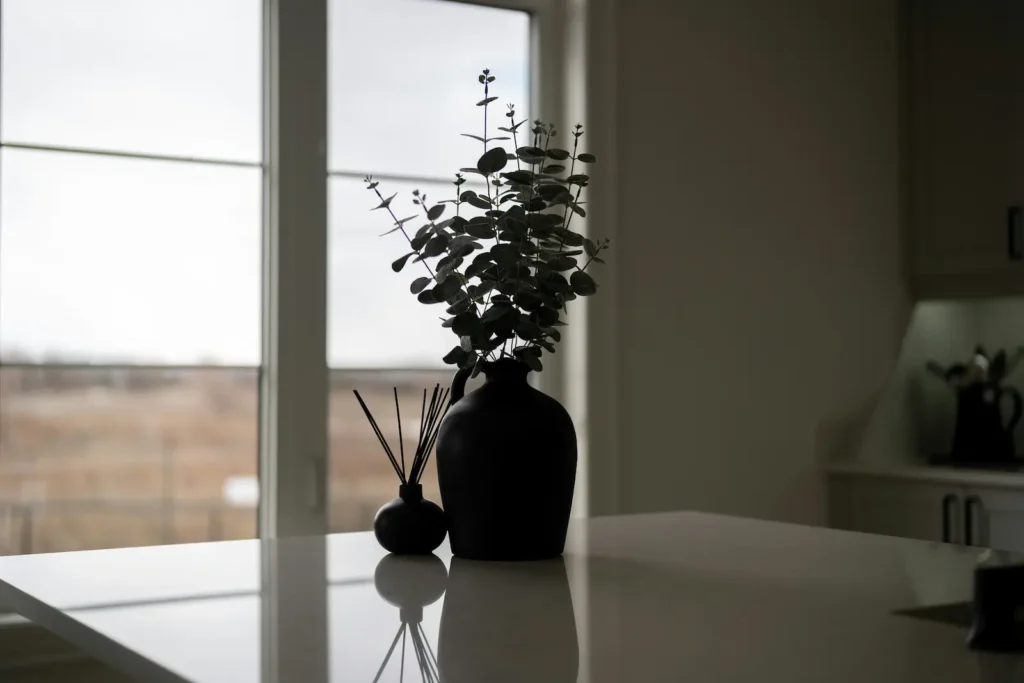
One of the most overlooked common toxins in homes comes from products designed to make homes smell fresh.
That includes:
- Scented candles
- Plug-in air fresheners
- Fabric sprays
- Dryer sheets
- Perfumes
- Scented cleaning products
Many fragrances contain volatile organic compounds (VOCs) and phthalates, chemicals associated with respiratory irritation and hormone disruption.
Manufacturers are often allowed to label dozens or even hundreds of chemicals simply as “fragrance” on ingredient lists.
That’s why a product can market itself as “green” or “natural” while still containing synthetic fragrance blends.
Practical Ways to Reduce Fragrance Exposure
You don’t need to eliminate every scented product overnight.
Start here:
- Open windows daily for airflow
- Choose fragrance-free cleaning products
- Use wool dryer balls instead of dryer sheets
- Switch to unscented laundry detergent
- Burn candles occasionally rather than daily
- Look for candles made with beeswax or soy and cotton wicks
One of the biggest mindset shifts in low-toxin living is realizing that “clean” doesn’t need to smell like anything.
2. Cleaning Products That Irritate More Than They Clean
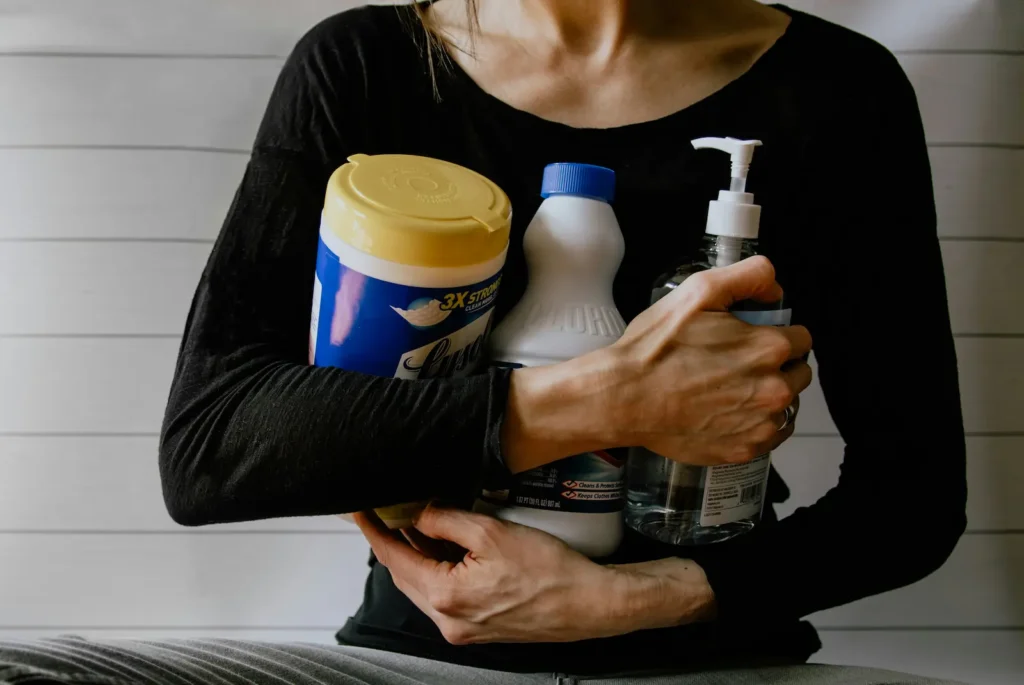
Many conventional cleaning products contain harsh chemicals that can linger in indoor air long after surfaces dry.
Common ingredients of concern include:
- Ammonia
- Chlorine bleach
- Quaternary ammonium compounds (“quats”)
- Artificial fragrance
- VOCs
Some disinfectants became especially common during the pandemic, but experts now emphasize that routine over-disinfection in homes isn’t always necessary.
Soap and water often do an excellent job for everyday cleaning.
Safer Cleaning Swaps That Actually Work
You do not need a Pinterest-worthy pantry of DIY cleaners.
A few simple products handle most household jobs:
- Unscented castile soap
- White vinegar (not on stone surfaces)
- Baking soda
- Hydrogen peroxide
- Microfiber cloths
For families with kids, reducing heavily fragranced spray cleaners can noticeably improve indoor air quality.
A good rule: if a cleaner makes you cough, gives you a headache, or requires aggressive ventilation, it’s probably worth reconsidering.
3. Nonstick Cookware and PFAS (“Forever Chemicals”)
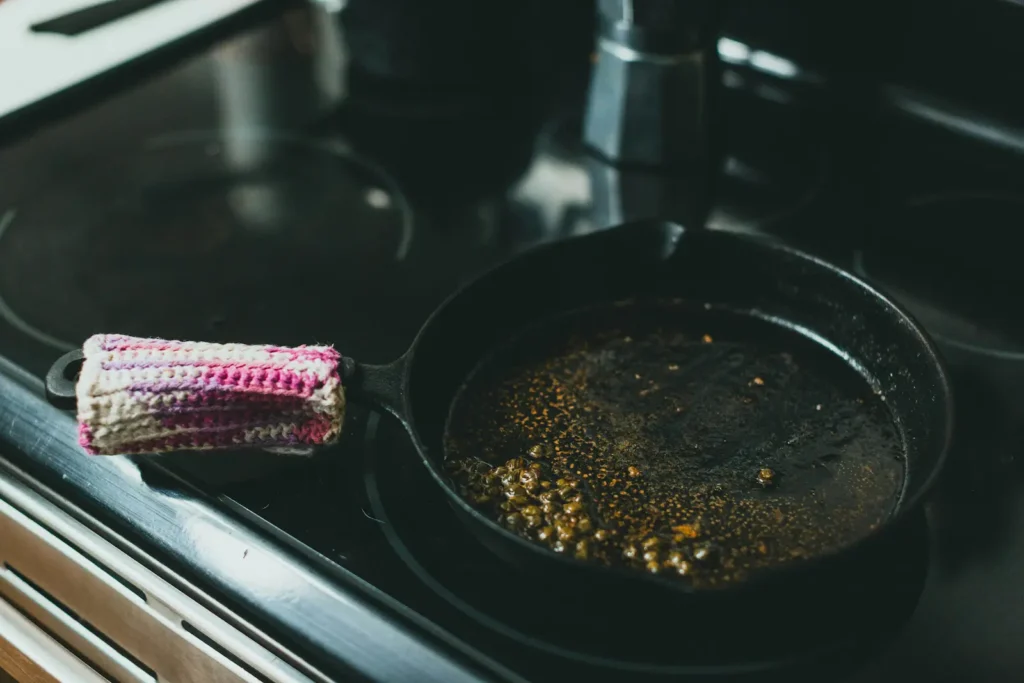
PFAS chemicals are often called “forever chemicals” because they break down extremely slowly in the environment and the human body.
They’ve been used in:
- Nonstick cookware
- Stain-resistant fabrics
- Waterproof products
- Fast food packaging
Older or damaged nonstick pans are a particular concern because coatings can degrade at high heat.
This doesn’t mean every nonstick pan is immediately toxic. But scratched, peeling, or overheated cookware deserves attention.
Better Cookware Options
Many families gradually transition to:
- Stainless steel
- Cast iron
- Ceramic-coated cookware
- Carbon steel pans
You don’t have to replace everything immediately.
A realistic approach:
- Stop using heavily scratched pans
- Replace items gradually as needed
- Avoid overheating empty nonstick cookware
Cast iron can feel intimidating at first, but many users eventually love how durable and versatile it becomes.
4. Plastics in the Kitchen

Plastic is deeply embedded in modern life, especially around food storage.
Some plastics may contain chemicals like BPA or phthalates, which can migrate into food under certain conditions — especially when heated.
Higher-risk situations include:
- Microwaving plastic containers
- Putting hot food into plastic
- Using old scratched plastic
- Heating plastic wrap
Simple Low-Stress Plastic Reductions
You don’t need a plastic-free kitchen to make progress.
Focus on high-impact habits:
- Avoid microwaving food in plastic
- Use glass containers for leftovers when possible
- Switch to stainless steel water bottles
- Store hot soups in glass instead of plastic
- Replace damaged plastic containers first
Many families find that gradual swaps are more sustainable than dramatic overhauls.
5. Dust: One of the Biggest Carriers of Household Toxins
Household dust is more than dirt.
Dust can contain:
- Flame retardants
- Pesticides
- Pet dander
- Heavy metals
- Microplastics
- Outdoor pollutants tracked indoors
Young children are especially exposed because they play on floors and frequently touch surfaces before eating.
How to Reduce Toxic Dust
This is one of the highest-impact areas for healthier homes.
- Vacuum with a HEPA filter
- Remove shoes indoors
- Damp dust surfaces regularly
- Wash hands before meals
- Wash bedding weekly
- Use doormats at entrances
One simple “no shoes inside” rule can significantly reduce pesticides and outdoor contaminants entering your home.
6. Flame Retardants in Furniture and Mattresses
Many couches, mattresses, and upholstered items historically contained flame retardant chemicals.
Over time, these chemicals migrate into household dust.
While regulations have changed in some countries, older furniture may still contain significant amounts.
What Families Can Do
You don’t need to throw away your sofa tomorrow.
Instead:
- Vacuum upholstered furniture regularly
- Use HEPA filtration
- Wash children’s hands often
- Consider safer materials when replacing items
When shopping for newer products, look for:
- GREENGUARD Gold certification
- OEKO-TEX certification
- Natural latex or organic materials where practical
7. Pesticides Around the Home and Garden
Pesticides don’t only live on farms.
They’re often found in:
- Lawn treatments
- Ant sprays
- Weed killers
- Flea treatments
- Indoor bug sprays
Children and pets are more vulnerable because they spend time close to floors and grass surfaces.
Smarter Pest Control Strategies
Integrated pest management (IPM) is often more effective long term than constant spraying.
That means focusing on:
- Sealing food properly
- Fixing moisture issues
- Blocking entry points
- Keeping kitchens crumb-free
- Using targeted treatments instead of blanket spraying
Sometimes prevention reduces the need for chemicals dramatically.
8. Mold and Moisture Problems
Mold isn’t always visible.
Even small moisture issues can affect indoor air quality and respiratory health.
Common hidden areas include:
- Behind washing machines
- Under sinks
- Bathrooms
- Window frames
- Basements
- Around leaking roofs
Early Signs to Watch For
- Persistent musty smells
- Condensation on windows
- Peeling paint
- Allergy symptoms that improve outdoors
- Visible discoloration
Prevention Matters Most
Good ventilation makes a huge difference.
Helpful habits:
- Use bathroom exhaust fans
- Run kitchen ventilation while cooking
- Dry wet laundry promptly
- Address leaks quickly
- Use a dehumidifier if needed
A healthy home doesn’t need to be sterile. It needs balanced airflow and moisture control.
9. Air Pollution From Cooking
Cooking itself can generate indoor pollutants, especially gas stoves and high-heat frying.
Cooking emissions may include:
- Nitrogen dioxide
- Carbon monoxide
- Fine particulate matter
This surprises many people because cooking feels wholesome and natural.
Easy Ways to Improve Kitchen Air Quality
- Use range hoods when cooking
- Open windows during high-heat cooking
- Use back burners when venting
- Avoid burning oils
- Clean grease buildup regularly
Ventilation is one of the simplest and most underrated health upgrades in a home.
10. Personal Care Products and Everyday Exposure
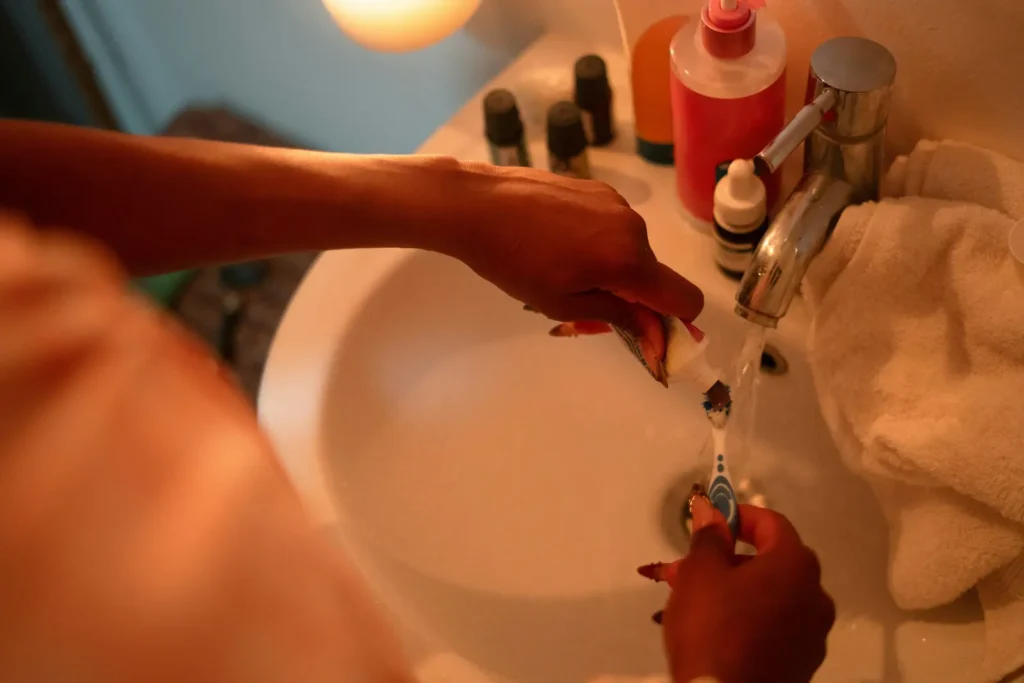
Shampoo, lotion, makeup, deodorant, and skincare products can also contribute to household toxin exposure.
This area becomes overwhelming quickly because marketing is full of fear-based messaging.
The reality is that not every ingredient labeled “chemical” is harmful, and natural products are not automatically safer.
A More Practical Approach
Instead of obsessing over every label:
- Reduce heavily fragranced products
- Simplify routines where possible
- Prioritize products used daily
- Focus on products children use most often
Many families discover that fewer products often works just as well.
The Biggest Mistake People Make With Low-Toxin Living
Perfectionism.
Some people discover household toxins and immediately feel pressure to:
- Replace everything
- Spend thousands on “clean” products
- Panic over every ingredient
- Feel guilty about past choices
That approach usually leads to burnout.
A healthier mindset is to think in layers.
Creating a Healthier Home Without Fear
There is not such a thing as a perfectly chemically free home.
It doesn’t exist.
The goal is awareness, balance, and intentional choices.
Children don’t need perfect homes. They need supportive environments where risk is reduced in practical ways.
And often, the healthiest homes don’t look extreme or expensive at all.
They simply prioritize simplicity.
Recap of The Highest-Impact Changes for Families
If you only focus on a few things, start here:
1. Improve Airflow
Open windows regularly and use ventilation fans.
2. Reduce Synthetic Fragrance
This alone can dramatically improve indoor air quality.
3. Control Dust
HEPA vacuuming and handwashing matter more than many expensive “clean living” products.
4. Avoid Heating Plastic
Especially around food.
5. Filter Drinking Water
A good water filter can reduce various contaminants depending on your local water supply.
6. Replace Products Gradually
Swap items as they wear out instead of creating financial stress.
Final Thoughts on the most Common Toxins in our Homes
Modern homes contain more synthetic chemicals than most people realize, but awareness doesn’t have to lead to anxiety.
The most effective approach is calm, informed, and realistic.
Focus on the highest-impact areas:
- Indoor air quality
- Fragrance reduction
- Safer food storage
- Better ventilation
- Dust control
- Smarter product choices
Over time, these small changes REALLY add up.
And perhaps the most encouraging part is this: healthier homes are rarely built through perfection. They’re built through steady, manageable decisions that support the well-being of the people living inside them.
That’s what truly matters.