
Is Eco-Friendly Always Better? How to Spot Greenwashing
The sustainable shopping guide nobody gives you until you’ve already spent too much money on bamboo toothbrushes and “conscious” leggings.
Table of Contents
The Uncomfortable Truth about “Eco-friendly” Products
A woman stands in the supermarket staring at two bottles of laundry detergent.
One is plain white with tiny text and no leafy graphics. The other practically screams planet saver. It’s covered in soft green colors, tiny trees, a smiling earth icon, and reassuring phrases like “natural,” “clean,” and “earth conscious.”
Guess which one most people buy.
Now guess which one actually has the better environmental impact.
That’s the problem with modern sustainability culture: somewhere between reusable coffee cups and carbon-neutral marketing campaigns, eco-friendly became less of a measurable standard and more of an aesthetic.
And brands know it.
The rise of sustainability has created something both hopeful and dangerous. Consumers genuinely care more about climate impact, ethical sourcing, and waste reduction than they did a decade ago. But at the exact same time, companies realized sustainability sells.
Which means we now live in a world where oil companies advertise sunsets, fast-fashion brands launch “conscious collections,” and bottled water companies print mountains on plastic packaging as if glaciers personally approved the product.
This is greenwashing.
And if you care about sustainability, learning how to spot greenwashing is arguably more important than memorizing which straw material is best.
Because the most damaging environmental products are no longer the ones openly ignoring sustainability.
They’re the ones pretending to care.
What Is Greenwashing and How to Identify It in Marketing
Greenwashing is when a company exaggerates, fabricates, or distracts consumers into believing its products or practices are environmentally responsible when the reality is far less impressive.
Sometimes it’s blatant.
Sometimes it’s technically true but deeply misleading.
And sometimes it’s so polished you almost admire the audacity.
A fashion brand may advertise a T-shirt made from “30% recycled materials” while producing billions of garments a year under exploitative conditions.
A cosmetics company might promote “natural ingredients” while packaging everything in layers of unrecyclable plastic.
An airline can invite you to “offset your emissions” while aggressively expanding flight routes.
None of those claims are necessarily false.
But they’re designed to steer your attention toward one tiny positive detail so you stop asking bigger questions.
That’s the genius of greenwashing.
It doesn’t need to lie outright.
It just needs to create the feeling of sustainability.
And feelings, unfortunately, are excellent for marketing.
Why Consumers Fall for Greenwashing so Easily
Here’s the part nobody likes admitting.
Most sustainability enthusiasts don’t get tricked because they’re uninformed.
They get tricked because they care.
People want to make better choices. They want to reduce harm. They want their purchases to align with their values.
Brands understand this emotional pressure perfectly.
That’s why greenwashing campaigns are often designed to relieve guilt rather than provide clarity.
The claim is rarely:
“Here is detailed lifecycle analysis data comparing our environmental impact.”
The message is:
“Relax. You’re one of the good people now.”
That emotional reassurance is powerful.
It’s also profitable.
The sustainability industry has quietly evolved into a lifestyle identity. Buying eco-friendly products can feel morally comforting, socially validating, and aesthetically pleasing all at once.
But sustainability is not a personality trait.
And companies know consumers often confuse looking sustainable with being sustainable.
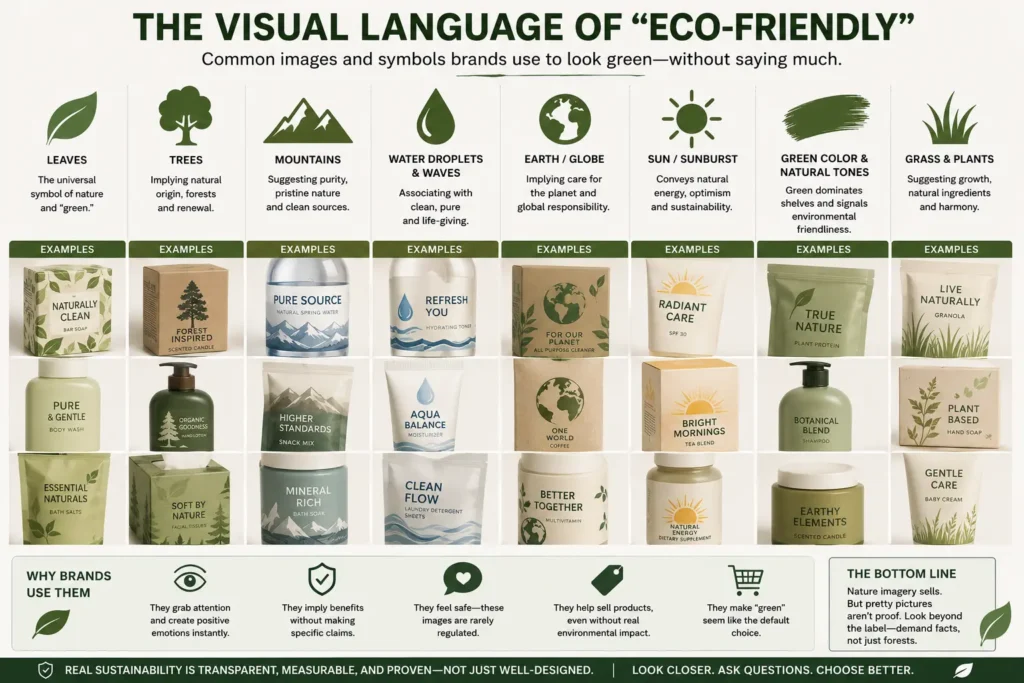
That’s why greenwashed products tend to share the same visual language:
- earthy colors
- minimalist packaging
- leaves, forests, water droplets
- words like “clean,” “green,” “mindful,” and “pure”
- vague promises with no measurable proof
At this point, you can practically smell the eucalyptus-scented deception.

How to Spot Greenwashing Before You Waste Your Money
Learning how to spot greenwashing is less about memorizing certifications and more about developing skepticism in the right places.
Not cynical skepticism.
Informed skepticism.
Because truly sustainable companies usually welcome scrutiny.
Greenwashed brands avoid it.
1. Watch for vague language that means absolutely nothing
One of the biggest red flags in sustainability marketing is the use of terms with no regulated definition.
Words like:
- eco-friendly
- all-natural
- green
- clean
- conscious
- ethical
- non-toxic
- sustainable
can be used incredibly loosely depending on the country and industry.
A shampoo brand can call itself “natural” because it contains aloe vera while still relying heavily on synthetic chemicals.
A clothing company can market “sustainable fashion” because one collection uses organic cotton while the rest of the business model depends on overproduction.
The issue isn’t that these words are always fake.
It’s that they’re often unsupported.
Real sustainability claims usually include specifics:
- percentage reductions
- supply chain transparency
- third-party certifications
- lifecycle data
- measurable goals
- timelines
Greenwashing hides behind ambiguity because ambiguity sounds comforting while avoiding accountability.
If a company makes a dramatic environmental claim without explaining exactly how, that’s your cue to investigate further.
And yes, “planet positive” deserves a raised eyebrow every single time.
2. Check whether the sustainable claim matches the overall business model
This is where many greenwashed brands completely fall apart.
A company may have one environmentally friendlier product while the rest of its operations remain deeply unsustainable.
Fast fashion is THE perfect example.
A retailer launches a “green collection” made from recycled polyester.
Sounds responsible.
Until you remember the company releases 10,000 new products every week, encourages disposable consumption, and relies on ultra-cheap manufacturing at enormous scale.
At some point, adding recycled fibers to overproduction is like putting oat milk in a gas-guzzling SUV and calling it climate activism.
The same logic applies across industries.
If a bottled water company talks endlessly about recyclable packaging while producing billions of single-use plastic bottles, the sustainability claim deserves context.
If an oil company spends more on eco-themed advertising than renewable energy investment, you’re not looking at transformation.
You’re looking at branding.
One sustainable initiative does not automatically make an entire company sustainable.
Always zoom out.
3. Follow the evidence, not the aesthetics
This might be the most important rule of all.
Sustainability is measurable.
Marketing is emotional.
Greenwashing happens when emotional branding replaces evidence.
Many companies invest heavily in sustainable-looking packaging because consumers instinctively associate certain visuals with environmental responsibility.
Brown cardboard packaging, muted green tones, handwritten fonts, tiny leaves everywhere.
Apparently, every ethical brand now lives in the same imaginary forest.
But packaging aesthetics are not proof. The companies worth trusting are usually willing to show receipts.
Look for:
- detailed sustainability reports
- independently verified certifications
- emissions disclosures
- sourcing information
- repair or recycling programs
- transparency around limitations and trade-offs
Interestingly, the most credible sustainability brands rarely present themselves as perfect.
They acknowledge complexity.
They discuss what still needs improvement.
They publish numbers that can actually be challenged.
Greenwashed brands, on the other hand, often sound suspiciously flawless.
And no genuinely sustainable company is flawless.
4. Beware of distraction tactics disguised as environmental action
Some companies focus intensely on tiny environmental improvements while avoiding discussion of their biggest impacts.
This is classic greenwashing strategy.
A cruise line may eliminate plastic straws while operating some of the most carbon-intensive tourism systems on Earth.
A cosmetics company may celebrate recyclable caps while sourcing environmentally destructive ingredients.
A tech brand may advertise carbon-neutral offices while ignoring massive supply chain emissions.
Tiny improvements are not meaningless.
But context matters.
The question isn’t:
“Did the company do one environmentally positive thing?”
The real question is:
“Is the company meaningfully addressing its biggest environmental impacts?”
Those are very different standards.
And companies absolutely know the difference.
The Sustainability Certification Problem Nobody Talks About
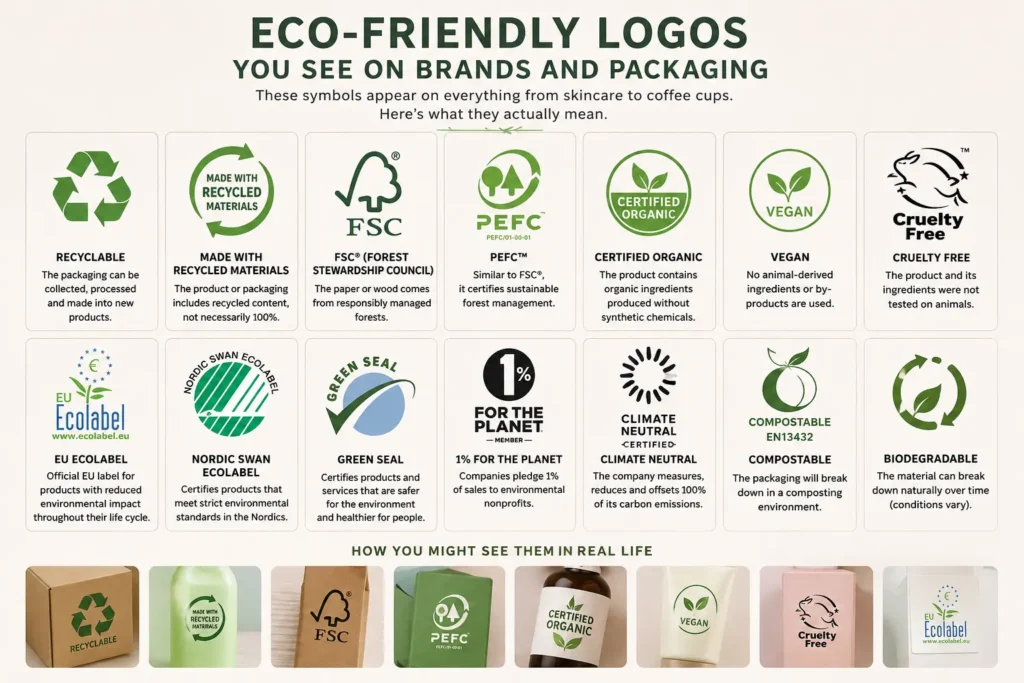
Consumers often assume certifications automatically equal trustworthiness.
Sometimes they do.
Sometimes they’re basically the sustainability version of participation trophies.
Not all certifications are equally rigorous.
Some involve strict third-party auditing and transparent standards.
Others are industry-created labels with surprisingly weak requirements.
And some logos exist primarily because consumers don’t have time to research every supply chain in existence.
Fair enough.
That’s why learning which certifications actually matter is useful.
Generally speaking, trustworthy certifications tend to:
- involve independent auditing
- publish transparent standards
- verify ongoing compliance
- disclose methodology
- avoid vague marketing language
Weak certifications often lack transparency or rely heavily on self-reporting.
And then there are the completely made-up eco symbols companies design themselves.
If a mysterious green leaf logo appears only on that company’s packaging and nowhere else, congratulations: you may have encountered sustainability fan fiction.
This doesn’t mean certifications are useless.
It means consumers still need critical thinking.
Because the reality is uncomfortable:
Even sustainability itself has become a marketing industry.
Why “Eco-friendly” Products are not Automatically Better
This is where sustainability conversations get messy.
People often want environmental decisions to feel simple.
Plastic bad.
Bamboo good.
Paper sustainable.
Done.
But environmental impact is rarely that straightforward.
Take cotton tote bags.
They became symbols of sustainable living almost overnight.
But multiple studies found that conventional cotton totes may need to be reused dozens — sometimes hundreds — of times before outperforming single-use plastic bags environmentally.
Suddenly the smug tote energy feels slightly less secure.
Or consider biodegradable products.
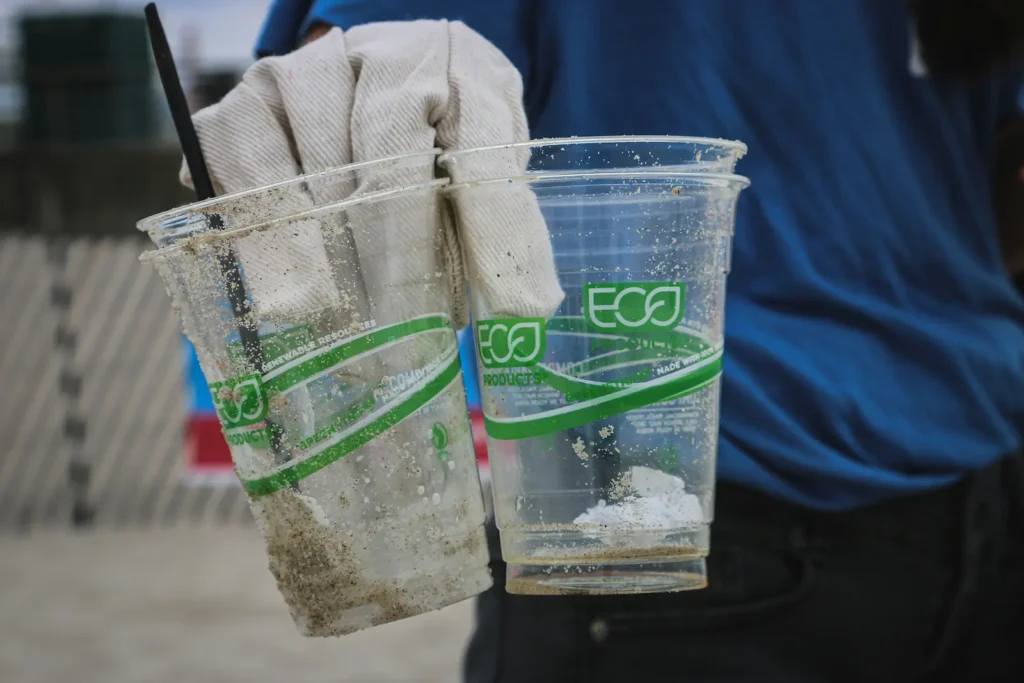
Some only break down under highly specific industrial composting conditions unavailable in many cities.
Meaning consumers proudly throw them away thinking they’re helping the planet while the products sit intact in landfill.
Even electric vehicles, renewable materials, and plant-based products involve trade-offs involving mining, water use, energy systems, transportation, or land use.
That doesn’t mean sustainability is fake.
It means environmental responsibility is nuanced.
And nuance is inconvenient for marketing campaigns.
The truth is:
A product being labeled eco-friendly does not guarantee lower environmental impact across its entire lifecycle.
Which is exactly why consumers need to learn how to spot greenwashing beyond surface-level claims.
The Psychology Behind Green Consumerism
Part of the reason greenwashing works so well is because modern consumer culture encourages people to shop their way into moral identity.
Buy the right water bottle.
Wear the right shoes.
Carry the right reusable cup.
Suddenly sustainability starts looking suspiciously like lifestyle branding with compost bins.
Corporations love this dynamic because it redirects attention away from systemic issues.
If consumers are busy debating metal straws online, they’re spending less time questioning industrial pollution, fossil fuel lobbying, or unsustainable production systems.
Individual action matters.
But greenwashing often exaggerates the power of personal consumption while downplaying corporate responsibility.
That’s why genuinely sustainable living is usually less glamorous than influencers make it seem.
It often looks like:
- buying less
- repairing items
- reusing products longer
- avoiding trend-driven consumption
- supporting durable goods
- questioning convenience culture
None of those habits photograph particularly well on Instagram.
Which may explain why they appear less often in advertising campaigns.
Real sustainability is frequently quieter than performative sustainability.
And honestly? Less aesthetically coordinated.
Industries Where Greenwashing Thrives the Most
Some industries greenwash harder than others simply because they face intense environmental criticism.
Fast fashion
Possibly the reigning champion of sustainability contradictions.
Many brands now release eco-conscious collections while still depending on hyper-consumption, synthetic fibers, excessive shipping, and rapid trend cycles.
If a company encourages consumers to buy 40 new outfits every month, organic cotton won’t magically fix the math.
Beauty and skincare
“Clean beauty” exploded in popularity despite having no universally standardized definition.
Brands frequently use fear-based marketing around chemicals while promoting “natural” alternatives that are not automatically safer or more sustainable.
Meanwhile packaging waste often remains enormous.
Fossil fuel companies
Perhaps the most infamous examples of greenwashing.
Many oil and gas corporations heavily market tiny renewable initiatives while continuing large-scale fossil fuel expansion.
The advertising often emphasizes personal environmental responsibility rather than industrial accountability.
Convenient.
Airlines and tourism
Carbon offsetting campaigns became popular partly because they allow companies to frame emissions as manageable through optional consumer payments.
But offset programs vary enormously in effectiveness, transparency, and permanence.
Meanwhile global aviation emissions continue growing.
None of this means consumers should abandon sustainability entirely.
It means consumers should stop accepting sustainability marketing at face value.
How Genuinely Sustainable Brands Usually Behave Differently
Ironically, the companies doing sustainability work seriously are often less dramatic about it.
They tend to communicate with more clarity because they understand environmental impact is complex.
Instead of claiming perfection, they often:
- explain trade-offs openly
- publish measurable targets
- discuss setbacks honestly
- encourage product longevity
- provide repair options
- disclose sourcing details
- avoid exaggerated claims
And perhaps most importantly, their sustainability messaging usually aligns with the entire business model rather than existing as a tiny marketing side quest.
A genuinely sustainable company does not need to scream “WE LOVE THE PLANET” every five seconds.
Its operations should speak loudly enough already.
That doesn’t mean every imperfect brand is automatically greenwashing.
Perfection is impossible.
But transparency matters.
Intent matters.
Scale matters.
And honesty about limitations matters enormously.
Practical Questions to Ask Before Buying “Eco-friendly” Products
If you really want to master how to spot greenwashing, stop asking whether a product sounds sustainable.
Start asking harder questions.
Questions like:
- What specific evidence supports this claim?
- Is the environmental benefit measurable?
- Does the company disclose meaningful data?
- Is the claim independently verified?
- Does the overall business model align with sustainability?
- Is this product solving a real problem or creating a trendy one?
- Could I simply buy less instead?
That last question is particularly inconvenient for modern consumer culture.
Because sometimes the most sustainable purchase is no purchase at all.
Not exactly the slogan brands want printed on billboards.
But true nonetheless.
Impact of Greenwashing on Consumer Trust
Climate anxiety is real.
Consumers increasingly want their spending habits to reflect their values.
That instinct is good.
But greenwashing exploits that urgency.
And when companies misuse sustainability language, it creates several problems at once:
- consumers waste money
- genuinely sustainable brands face unfair competition
- public trust erodes
- environmental progress slows
- harmful industries delay accountability
In other words, greenwashing isn’t just annoying marketing.
It actively interferes with meaningful sustainability progress. This phenomenon is being studied. One particular study found that when people perceive greenwashing, it leads to feelings of betrayal, which directly lowers green purchasing intention.
Because if every company claims to be eco-friendly, the term eventually stops meaning anything.
That’s why critical thinking is now part of responsible consumption.
Consumers don’t need to become environmental scientists overnight.
But they do need to become harder to manipulate.
Sustainability Without the Performance Art
There’s something strangely liberating about realizing sustainable living does not require perfection.
You do not need an all-beige zero-waste kitchen.
You do not need to replace every possession with a bamboo alternative by Thursday.
And you definitely do not need to trust every product covered in leaves and moral superiority.
The goal isn’t flawless consumption.
The goal is more conscious decision-making.
That means:
- slowing down purchases
- researching major claims
- prioritizing durability
- supporting transparency
- avoiding excessive consumption
- staying skeptical of trend-driven sustainability
And yes, occasionally laughing at the absurdity of companies trying to sell environmental salvation through luxury scented candles.
Because sustainability should not become another status competition. Real environmental progress is not about hyper-curated glamorous social media moments.
Final Thoughts: Eco-friendly Should Mean Something
The problem with modern sustainability marketing is not that consumers care too much.
It’s that companies learned how profitable caring can be.
So now the responsibility falls partly on consumers to separate meaningful environmental action from polished branding exercises.
Learning how to spot greenwashing is ultimately about protecting both your money and your values.
Because genuinely sustainable businesses deserve support.
But companies using sustainability as aesthetic camouflage deserve scrutiny.
The next time a product promises to save the planet, pause before reaching for your wallet.
Look past the soft green packaging.
Ignore the inspirational leaf graphics.
Ask inconvenient questions.
Demand specifics.
And remember:
The most sustainable choice is not always the product that looks eco-friendly.
It’s the one backed by honesty, transparency, and meaningful impact.
Which, inconveniently for marketing departments everywhere, cannot be printed in trendy sage-green font alone.
For more tips on what here is a The Ultimate Guide to Living Sustainably
Want to live more sustainably in 2026 without the confusion? Read our complete sustainable living guide for practical eco-friendly tips, low-waste habits, and realistic ways to create a greener lifestyle.