
How to Reduce Toxins Naturally: A Beginner’s Guide (Without Going Zero-Waste)
If the words “zero-waste” or “non-toxic living” make you picture a Pinterest-perfect pantry full of glass jars with hand-lettered labels… take a breath. That’s not what this is.
This is for the rest of us. The ones with a full schedule, a family to feed, a budget that doesn’t stretch to artisanal soap, and a genuine, quiet worry that creeps in sometimes — am I poisoning my home without realizing it?
The short answer: probably a little, yes. Almost everyone is. And the good news, the real good news, is that you don’t need to overhaul your entire life to change that.
Instead, you can implement little changes in habits that will help reduce toxins naturally at home.
You just need to start. One swap, one habit, one room at a time.
Let’s talk about what that actually looks like.
Table of Contents
You Don’t Need to Be “Crunchy” to Care About This
There’s a stereotype out there that caring about toxins means becoming a certain kind of person — someone who makes their own deodorant, only wears linen, and has opinions about essential oil diffusers at every family gathering.
That’s not the assignment here.
Reducing toxins naturally is simply about awareness with action. It’s choosing the better option when it’s easy, and not stressing when it isn’t. It’s reading a label one extra time at the store. It’s opening a window instead of spraying air freshener.
Small, doable, sustainable — that’s the whole philosophy.
And honestly? A lot of this is wisdom that’s been passed down for generations. Vinegar to clean. Baking soda to deodorize. Cooking with simple ingredients you can pronounce.
Your abuela probably already knew more about non-toxic living than half the wellness influencers online — she just called it “common sense.”
Why “Toxins” Are Worth Thinking About in the First Place
Let’s get one thing straight: not everything labeled “chemical” is dangerous, and not everything “natural” is automatically safe.
Water is a chemical compound. Poison ivy is natural.
The goal isn’t to fear every product in your home — it’s to understand which substances tend to build up in our bodies and environments over time, and to gently reduce our exposure to those.
The substances that experts most often flag for everyday households include:
- Phthalates — found in synthetic fragrances, vinyl, and some plastics, linked to hormone disruption
- PFAS (“forever chemicals”) — used in non-stick cookware, stain-resistant fabrics, and some food packaging
- VOCs (volatile organic compounds) — released by paints, cleaning sprays, air fresheners, and new furniture
- Parabens and certain preservatives — common in lotions, shampoos, and cosmetics
- Flame retardants — found in foam furniture, mattresses, and some children’s products
These aren’t things to panic about. They’re things to gradually replace as you go. Think of it less like a detox and more like a slow remodel — you’re not gutting the house, you’re just upgrading one fixture at a time.
If you want to know more about how to live a low-tox lifestyle, read our post on Common toxins in Homes and discover all the hidden sources of toxins and simple ways to reduce chemical exposure.
Start in the Kitchen: Where You Already Spend Most of Your Energy
The kitchen is often the highest-impact place to begin reducing your toxic load — mostly because it’s where food, heat, and storage all collide.
Look at your cookware first
If your non-stick pans are scratched, peeling, or older than a few years, they’re likely shedding particles into your food.
If you just commit to your next pan being stainless steel, cast iron, or ceramic-coated. One pan at a time, your kitchen quietly transforms.
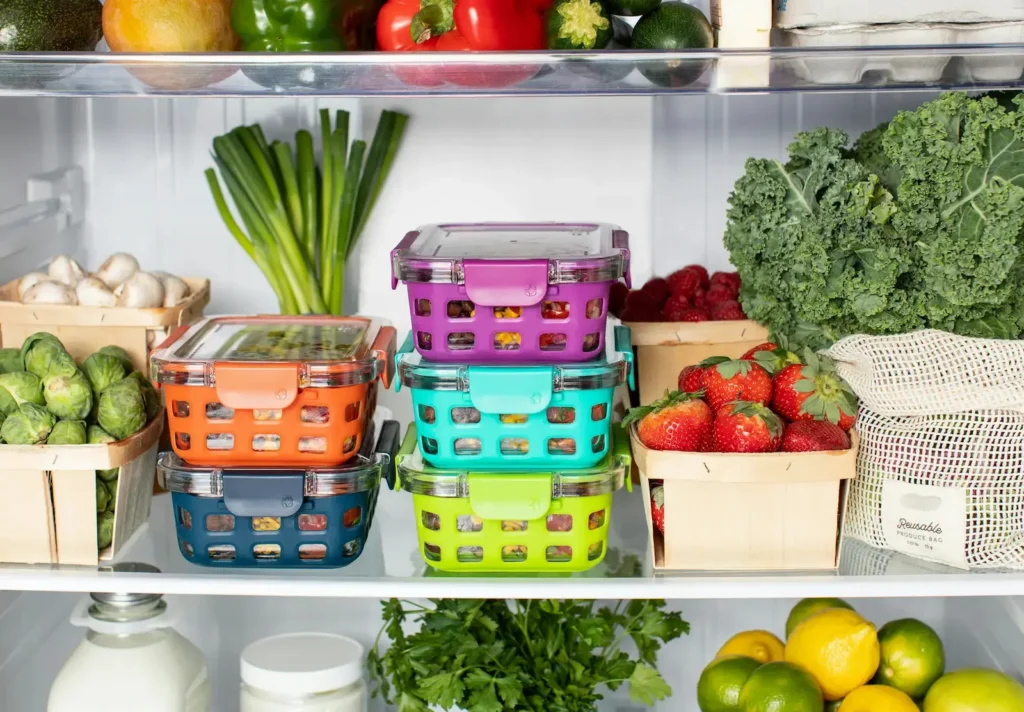
Rethink plastic storage, gradually
Glass containers are wonderful, but they’re also expensive and heavy, and honestly, I can think better ways to spend my money than on my Tupperware drawer.
Prioritize the containers that touch hot food the most — the ones you use for leftovers straight out of the microwave or for storing acidic foods like tomato sauce. Those are the ones doing the most chemical “leaching” work, so swap those first.
Little tip on this one: many foods and ingredients come in glass jars, not a bad idea to reutilize those.
Skip the receipts when you can
This one surprises people — thermal paper receipts are often coated in BPA or BPS. Saying “no thanks” to a paper receipt at the pharmacy or grocery store is a tiny habit that adds up.
The Cleaning Cabinet: Your Easiest Win
If you’re looking for a quick and easy win, make it here.
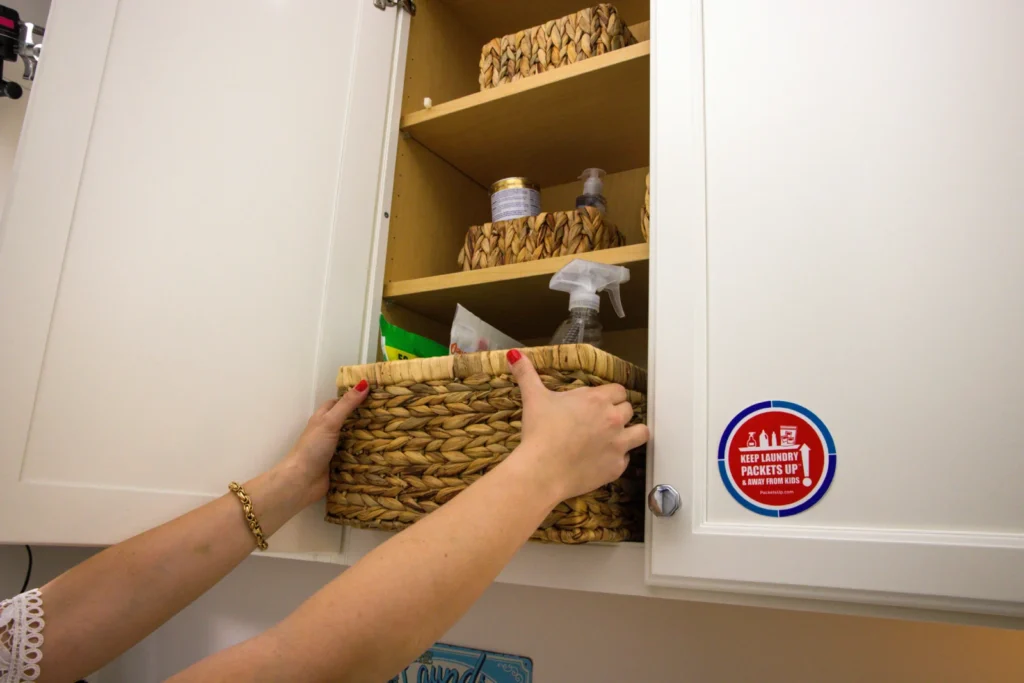
Cleaning products are one of the biggest sources of indoor air pollutants — and they’re also one of the easiest and cheapest things to swap; they naturally finish quite often so it gives us the opportunity, and better alternatives are often things you already have.
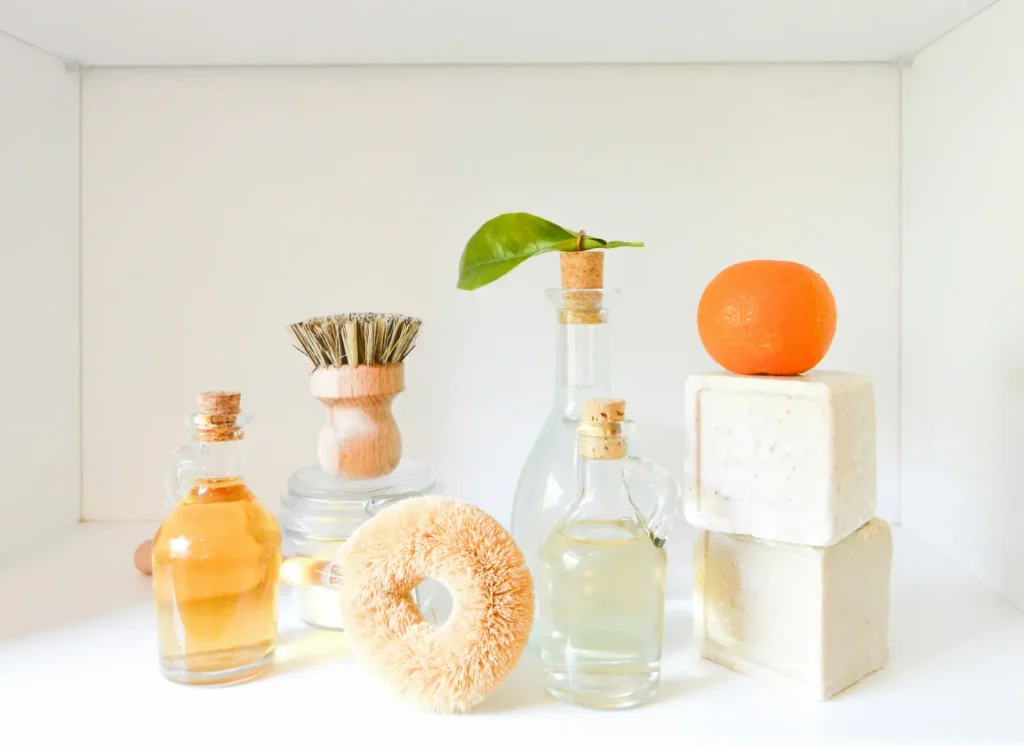
A simple combination of white vinegar, water, and a splash of castile soap will handle most surfaces in your home. Baking soda tackles odors and scrubbing jobs. Lemon cuts grease. These aren’t trendy hacks — they’re the foundation of cleaning before the chemical industry convinced us we needed a different spray bottle for every surface in the house.
If making your own cleaners feels like one more chore on your plate (totally fair — you’re not signing up to become a DIY chemist), look for store-bought options that list their ingredients clearly on the label.
If a cleaning product won’t tell you what’s in it, that itself is information.
The fragrance question
This is a big one. “Fragrance” on a label is often a catch-all term that can hide dozens of undisclosed chemical compounds, including phthalates. You don’t have to live in a scent-free home — that sounds miserable, honestly — but consider shifting toward products scented with essential oils, planting flowers around the house, or simply using less synthetic fragrance overall. Open a window. Let fresh air do what it does.
Let Your Home Breathe
Indoor air is often more polluted than the air outside — partly because our homes are sealed up tight to save on heating and cooling, which means whatever chemicals are released from paint, furniture, cleaning products, and cooking just… stay there, circulating.
The fix is refreshingly simple: open your windows. Even ten minutes a day makes a measurable difference in indoor air quality. Pair that with a few houseplants — pothos, spider plants, and snake plants are nearly impossible to kill and do quiet work filtering the air while they sit on your windowsill looking pretty.
If your budget allows, a basic air purifier with a HEPA filter in your bedroom — where you spend roughly a third of your life — is one of the highest-impact additions you can make. But if that’s not in the cards right now, ventilation and plants will take you a long way.

Personal Care: Read the Label, Skip the Guilt
Here’s where a lot of people get stuck, because the bathroom shelf can feel personal — your favorite lotion, that perfume you’ve worn since college, the lipstick that makes you feel like you. You don’t have to throw any of it away.
Instead, think of personal care the way you’d think of your pantry: as things get used up, replace them thoughtfully. Look for products free of parabens, phthalates, and “fragrance” as a vague catch-all.
Apps that scan ingredient lists can help if labels feel overwhelming — you don’t need to memorize a chemistry textbook, just build a habit of checking before you buy.
And give yourself grace here. Reducing toxins naturally isn’t about achieving a “clean” bathroom cabinet by next Tuesday. It’s about the products you buy a year from now looking a little different than the ones you bought a year ago.
The Bedroom: Where Healing Happens
We tend to overlook the bedroom in conversations about toxins, but it deserves attention — it’s where your body spends hours every night repairing and resetting.
Synthetic bedding, foam pillows, and mattresses can off-gas VOCs and may contain flame retardants. Again, you don’t need to buy an all-organic bed tomorrow. But when it’s time to replace a pillow or a comforter, look for natural fibers like cotton, wool, or linen. Wash new bedding before you sleep on it — this helps reduce the chemical finishes applied during manufacturing.
Dust is also worth a mention here. Many household chemicals settle into dust, which means regular vacuuming (ideally with a HEPA filter) and a quick wipe-down with a damp microfiber cloth do double duty: cleaner home, lower toxic load.
Building a Routine That Actually Sticks
The biggest reason most “toxin-free” resolutions fail isn’t lack of motivation — it’s that they’re framed as a finish line instead of a practice. Nobody finishes detoxing their home. It’s not a weekend project; it’s a slow, ongoing relationship with the spaces you live in.
A few ways to make it sustainable:
- Replace, don’t discard. When something runs out or wears out, choose a better version. Don’t toss things that still work just to feel “pure” — that’s wasteful in its own way.
- Pick one room a month. Trying to overhaul your entire home at once is how good intentions turn into overwhelm, and overwhelm is how good intentions die.
- Prioritize by exposure, not by trend. The things that touch your skin, your food, or the air you breathe for hours each day matter more than the things sitting in a drawer.
- Let go of perfection. You will still use a plastic container sometimes. You’ll still buy the candle that smells like your favorite bakery because it brings you joy. That’s allowed. This is about direction, not purity.
A Gentle Reminder for Anyone Feeling Overwhelmed
If you’ve read this far and you’re sitting there thinking about everything in your home that you “should” change, take a breath. Truly — that pressure is the opposite of the point.
This isn’t about fear. It’s about gently shifting the odds in your favor, one small choice at a time, in a way that fits into a real, full, busy life. You’re not failing if your kitchen still has plastic containers in it. You’re not behind if you haven’t switched to glass tupperware or thrown out your favorite mascara.
Progress here looks like awareness, not perfection. And awareness is something you already have, simply by reading this.

Ready to Take the Next Step?
If you’re ready to start making these small swaps but aren’t sure where to begin, we’ve put together a free Non-Toxic Home Checklist — a simple, room-by-room guide that walks you through the easiest, highest-impact changes you can make, without the overwhelm and without needing to go zero-waste.
[Download your free Non-Toxic Home Checklist here →]
Print it, stick it on your fridge, and check things off as you go — at your own pace, in your own home, in your own way.
Let’s do better, one small step at a time.